Mattress Firmness Explained: How to Find the Right Feel for Your Sleep Style

Choosing a mattress is not only about the brand, price, or material. One of the most important factors is firmness. The firmness level affects how your body feels when you lie down, how much pressure relief you get, and how well your spine stays supported through the night.
Some people sleep better on a soft mattress that cushions the shoulders and hips. Others need a firmer surface that keeps the body lifted and stable. The right choice depends on your sleep position, body type, comfort preference, and whether you deal with pressure points or back discomfort.
Understanding mattress firmness can help you shop with more confidence and avoid choosing a bed that feels good for a few minutes but does not support your sleep long term.
What Does Mattress Firmness Mean?
Mattress firmness describes how soft or firm a mattress feels when you lie on it. It is different from support, although the two are closely connected.
Firmness is about the comfort feel. Support is about how well the mattress keeps your body aligned. A soft mattress can still be supportive if it has strong base layers or coils. A firm mattress can still feel uncomfortable if it does not relieve pressure in the right areas.
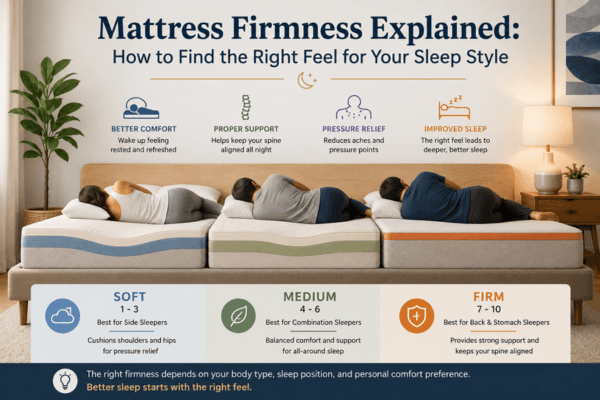
Most mattress brands use a firmness scale from 1 to 10:
- 1 to 3: Soft
- 4 to 6: Medium to medium-firm
- 7 to 10: Firm to extra-firm
Many popular mattresses fall in the medium-firm range because it works for a wide range of sleepers. However, that does not mean medium-firm is right for everyone. Your sleep position and body shape can change how a mattress feels.
Soft Mattresses: Best for Cushioning and Pressure Relief
A soft mattress usually has more cushioning near the top. It lets the body sink in more, which can help reduce pressure around the shoulders, hips, and joints.
Soft mattresses are often a good fit for side sleepers. When you sleep on your side, your shoulders and hips press more directly into the mattress. If the mattress is too firm, those areas may feel sore or compressed. A softer surface can help the body settle in more comfortably.
Soft mattresses may also appeal to lighter-weight sleepers. People with lower body weight may not sink deeply into a firm mattress, which can make the bed feel harder than expected. A softer mattress can provide more noticeable contouring.
However, soft mattresses are not always ideal for stomach sleepers or people who need stronger lift. Too much sink can cause the hips to dip too far into the bed, which may affect spinal alignment.
Medium Mattresses: Balanced Comfort for Many Sleepers
Medium and medium-firm mattresses are popular because they offer a blend of cushioning and support. They are not too plush, but they are not overly hard either.
This type of mattress can work well for combination sleepers who switch positions at night. A medium feel can provide enough pressure relief for side sleeping while still offering support for back sleeping.
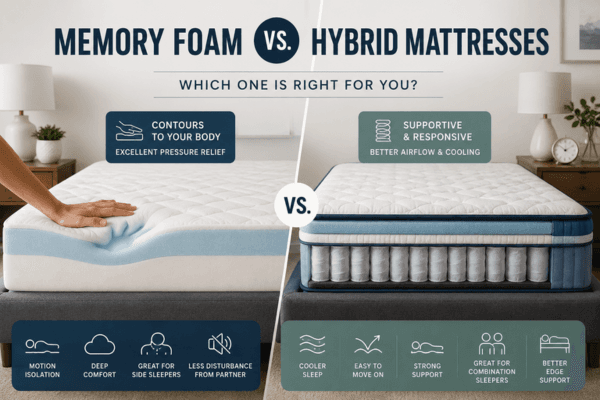
Medium mattresses are also common in hybrid designs. A hybrid mattress often combines foam comfort layers with coil support. This can create a balanced feel with contouring on top and a more stable base underneath.
Couples may also prefer medium mattresses because they often suit different sleeping styles. If one person likes more cushioning and the other wants support, a medium feel can be a practical compromise.
Firm Mattresses: Strong Support and Less Sink
A firm mattress keeps the body more lifted on top of the bed. It usually has less sink and a more stable surface.
Firm mattresses are often a good match for stomach sleepers. When sleeping on your stomach, the hips and midsection can sink too far if the mattress is too soft. A firmer surface helps keep the body more level.
Back sleepers may also like firm or medium-firm mattresses, especially if they want support around the lower back. A firmer bed can help prevent the lower body from dropping too deeply into the mattress.
Firm mattresses may also work better for heavier sleepers who need stronger support. A mattress that feels medium to one person may feel softer to someone with more body weight. For this reason, some brands offer firm or plus-size mattress options with reinforced coils, thicker support layers, or more durable foam.
The downside is that firm mattresses may feel too hard for some side sleepers. Without enough cushioning, pressure can build around the shoulders and hips.
How Sleep Position Affects Firmness Choice
Your sleep position is one of the easiest ways to narrow down the right firmness level.
Side Sleepers
Side sleepers usually need pressure relief. A soft to medium mattress often works best because it allows the shoulders and hips to sink slightly while supporting the waist and lower back.
A mattress that is too firm may cause pressure points. A mattress that is too soft may make the body feel unsupported.
Back Sleepers
Back sleepers typically need balanced support. A medium to medium-firm mattress is often a good match because it supports the spine while still providing light cushioning.
The goal is to keep the lower back supported without forcing the body into an uncomfortable position.
Stomach Sleepers
Stomach sleepers usually need a firmer mattress. A soft bed can allow the hips to dip too low, which may create strain through the lower back.
A firm or medium-firm mattress helps keep the body flatter and more stable.
Combination Sleepers
Combination sleepers move between positions during the night. A medium mattress is often the safest choice because it can adapt to different positions.
A responsive hybrid mattress may also help because it is easier to move on compared with very soft memory foam.
Mattress Material Can Change the Feel
Firmness is important, but the mattress material also affects comfort.
Memory foam often feels contouring and pressure-relieving. It can be great for side sleepers or people who like a hugging feel. However, some memory foam mattresses may feel slower to respond when you move.
Hybrid mattresses combine foam layers with coils. They usually feel more supportive, breathable, and responsive. This can be a good choice for couples, hot sleepers, and combination sleepers.
Latex mattresses often feel more buoyant and responsive. They may appeal to shoppers who want a natural-style mattress with less sink than traditional memory foam.
Innerspring mattresses usually feel bouncier and firmer. They can offer strong support but may have less cushioning unless they include a pillow top or comfort layer.
Do You Sleep Hot?
Firmness is not the only thing to consider. Temperature can also affect sleep quality.
Some people sleep hot on dense foam mattresses because certain materials can trap heat. If overheating is a concern, look for mattresses with cooling covers, breathable foam, gel-infused layers, latex, or coil systems that allow better airflow.
Hybrid and latex mattresses often feel cooler than all-foam beds because they allow more air to move through the mattress. This does not guarantee a cool night for everyone, but it can help reduce heat buildup.
What About Couples?
Couples may need to balance two different comfort preferences. One person may want a soft mattress, while the other prefers firm support.
A medium or medium-firm hybrid mattress is often a good middle ground. It can provide pressure relief, support, and easier movement. Motion isolation is also important. If one person moves a lot at night, memory foam or a hybrid with strong motion control can help reduce disturbance.
Edge support can also matter for couples. A mattress with stronger edges gives both people more usable space across the bed.
Why Trial Periods Matter
Even if a mattress looks perfect online, it can take time to know if it works for your body. Many mattress brands offer sleep trials so shoppers can test the mattress at home.
This is helpful because a mattress may feel different after several nights than it does on the first day. Your body may need time to adjust, especially if you are switching from an old mattress or changing firmness levels.
Before buying, check the trial policy, return process, warranty terms, and whether there are any return fees. These details can make a big difference in the overall shopping experience.
Signs Your Mattress May Be the Wrong Firmness
You may need a different firmness level if you often wake up sore, feel pressure in your shoulders or hips, sink too deeply into the bed, or feel like your lower back is unsupported.
A mattress that is too soft may make it harder to keep your spine aligned. A mattress that is too firm may create pressure points and discomfort. The right mattress should feel comfortable while keeping your body supported.
Final Thoughts
Mattress firmness plays a major role in how comfortable and supported you feel at night. Soft mattresses can help with pressure relief, firm mattresses can provide stronger lift, and medium mattresses can offer a balanced feel for many sleepers.
The best mattress firmness depends on how you sleep, your body type, and what kind of comfort you prefer. Side sleepers may need more cushioning, stomach sleepers often need firmer support, and back sleepers usually do best with a balanced feel.
Before choosing a mattress, think about your sleep position, temperature needs, material preference, and whether you share the bed. A good mattress should help you rest more comfortably, wake up with less stiffness, and feel supported from night to morning.