Your Ultimate Guide: How to Choose the Perfect Mattress for a Better Night’s Sleep

A great day starts the night before, and the foundation of restorative sleep is the right mattress. With countless options on the market, choosing the perfect one can feel overwhelming. But it doesn’t have to be. Think of your mattress as a long-term investment in your health, happiness, and productivity. A mismatched mattress can lead to back pain, restless nights, and fatigue, while the right one provides the support and comfort your body needs to truly recharge.
This comprehensive guide will walk you through everything you need to know, step-by-step, to find the mattress that’s perfectly suited to you. Let’s decode the jargon and simplify the process of finding your ideal sleep surface.
Step 1: Identify Your Primary Sleeping Position
The way you sleep is the most critical factor in determining your mattress needs. Your sleeping position dictates how your weight is distributed and which parts of your body require the most support to maintain proper spinal alignment.
Side Sleepers
This is the most common sleeping position. Side sleepers need a mattress that is soft enough to contour to their curves, relieving pressure on the shoulders and hips. A medium-soft to medium mattress is typically ideal to prevent pressure point pain while still supporting the spine.
Back Sleepers
Back sleepers require a surface that supports the natural curve of their spine. A mattress that is too soft will cause the hips to sink, creating a hammock effect and straining the lower back. A medium-firm to firm mattress is usually the best choice to provide consistent, even support.
Stomach Sleepers
Sleeping on your stomach can put significant strain on your neck and spine. To minimize this, stomach sleepers need a firm mattress that prevents their midsection from sinking too deeply, which would arch the back unnaturally. A firm surface helps keep the spine as neutral as possible.
Combination Sleepers
If you switch positions throughout the night, you need a mattress that offers a balance of comfort and responsiveness. A medium-firm mattress is often the best compromise, providing adequate support for back and stomach sleeping, enough cushioning for side sleeping, and ease of movement.
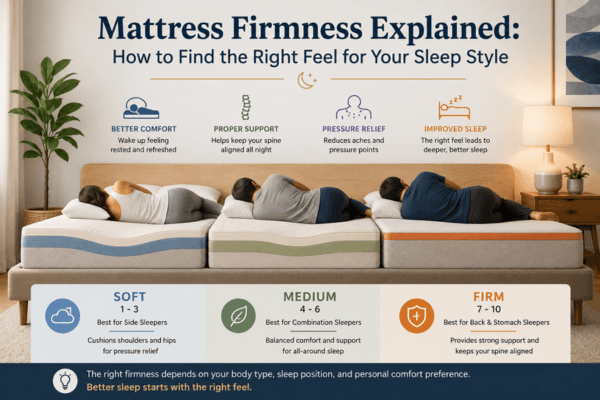
Step 2: Decode Mattress Firmness Levels
Firmness is subjective, but it’s generally rated on a scale of 1 to 10, with 1 being the softest and 10 the firmest. Most mattresses fall between 3 (soft) and 8 (firm). Your ideal firmness depends on your sleeping position (as noted above) and your body weight.
- Soft (3-4): Best for lighter-weight side sleepers who need significant pressure relief.
- Medium (5-6): The “universal” comfort level that suits most combination and side sleepers of average weight.
- Medium-Firm (6.5-7): An excellent choice for back sleepers and heavier individuals who need more support.
- Firm (7.5-8): Recommended for stomach sleepers and those who prefer to sleep “on” their mattress rather than “in” it.
Step 3: Compare Common Mattress Types
Each mattress material offers a unique feel and set of benefits. Understanding the core differences is key to narrowing your search.
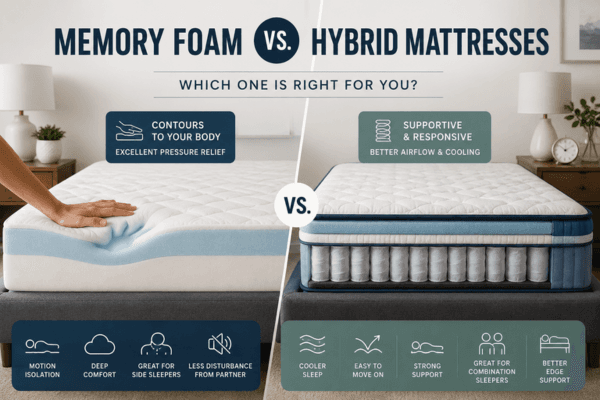
Memory Foam
Known for its deep contouring and pressure relief, memory foam cradles your body, making it great for side sleepers and those with joint pain. It also excels at motion isolation, which is a huge plus for couples.
Innerspring
The traditional choice, innerspring mattresses use a network of steel coils for support. They are known for their bouncy feel, strong edge support, and excellent airflow, which helps with temperature regulation. Modern versions often include comfort layers on top.
Latex
Latex mattresses offer a responsive, buoyant feel that contours to the body without the deep “sinking” feeling of memory foam. Latex is naturally durable, hypoallergenic, and sleeps cooler than many other foam types.
Hybrid
Hybrids combine the best of both worlds: a supportive coil base like an innerspring mattress with substantial comfort layers of memory foam, latex, or both. This provides a balanced feel of support, bounce, and pressure relief that appeals to a wide range of sleepers.
Step 4: Consider Your Body Weight
Your weight affects how a mattress feels and performs. A mattress will feel firmer to a lighter person and softer to a heavier person. It’s crucial to choose a mattress that can properly support your frame.
- Lightweight Sleepers (under 130 lbs): Typically need a softer mattress (3-5 firmness) to experience adequate contouring and pressure relief.
- Average Weight Sleepers (130-230 lbs): The industry standard. Most medium-firm mattresses (5-7) are designed for this weight range and will provide a good balance of comfort and support.
- Heavier Sleepers (over 230 lbs): Require a firmer, more durable mattress (7-8 firmness) with a robust support core (like thicker coils or high-density foam) to prevent sagging and ensure proper spinal alignment.
Step 5: Factor in Special Considerations
Finally, address any specific needs you have to truly customize your sleep experience.
- Hot Sleepers: If you tend to overheat at night, look for mattresses with cooling features like gel-infused foam, breathable latex, or hybrid designs that promote airflow.
- Back Pain Sufferers: A medium-firm mattress with zoned support is often recommended. This provides targeted firmness for your lower back and hips while offering softer comfort for your shoulders.
- Couples: If you share a bed, prioritize a mattress with good motion isolation (like memory foam or a hybrid with pocketed coils) to avoid being disturbed by your partner’s movements. Strong edge support is also important to maximize usable surface area.
Ready to Find Your Dream Mattress?
Choosing a mattress is a personal journey, but you’re now equipped with the knowledge to make an informed decision. By considering your sleep position, firmness preference, body type, and unique needs, you can confidently select a mattress that will deliver years of comfortable, rejuvenating sleep. Remember, this is an investment in your overall well-being.